Parker Solar Probe observed solar material reversing toward the sun, revealing new details about space weather.
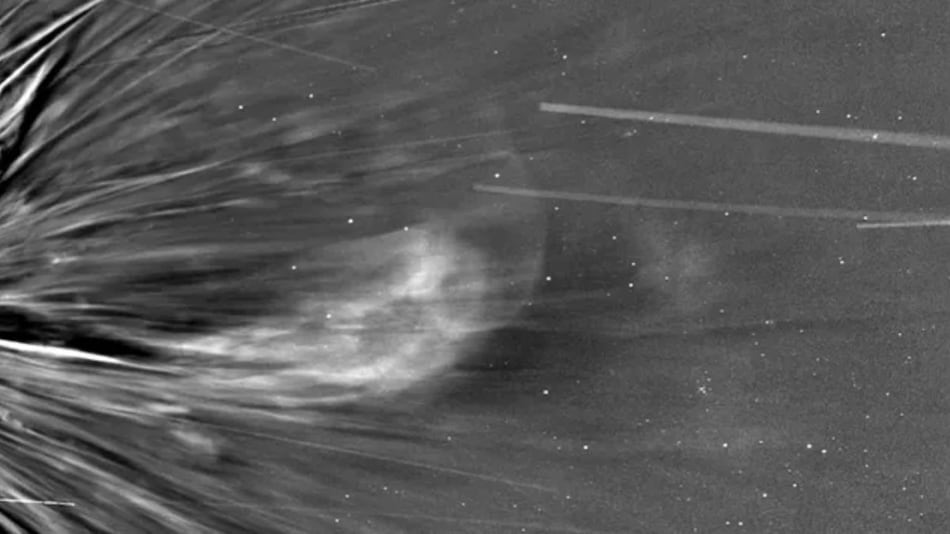
NASA’s Parker Probe captures solar wind looping back to the sun, showing magnetic recycling in action.
Click Here to Add Gadgets360 As A Trusted Source

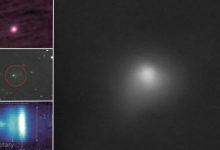
NASA’s Parker Solar Probe has taken the clearest image so far of a solar wind performing a “U-turn”, providing rare glimpses into the sun’s magnetic recycling. Passing within a scant 3.8 million miles of the solar surface on Dec. 24, 2024, the spacecraft witnessed a coronal mass ejection (CME) surge from the sun and explode out, but was followed by some superheated material raining back down to the sun. Incoming material trails along magnetic field lines, snapping and reconnecting in giant loops that reshape the sun’s magnetic environment and may redirect future CMEs.
Parker Solar Probe Captures Sun’s Magnetic Recycling and Coronal Material Inflows in Unprecedented Detail
According to a NASA report, this process, known as inflows, had been hinted at in previous distant observations, but Parker’s close-up images revealed the returning blobs in unprecedented detail. Project scientist Nour Rawafi at Johns Hopkins Applied Physics Laboratory mentioned the observations provide “a fascinating glimpse into how the sun continuously recycles its coronal magnetic fields and material.” That could, possibly, have an impact on predicting the arrival of solar storms at planets such as Earth or Mars, noted by WISPR project scientist Angelos Vourlidas.
CMEs, explosions of superheated plasma, can damage power grids, satellites, and communications. Parker’s video captures the magnetic fields stretching, snapping, looping, and moving off into space or hugging back with solar material.
Scientists Measure Sun-Falling Plasma Blobs, Enhancing Space Weather Forecasting and Solar Storm Predictions
For the first time, researchers calculated blobs falling into the sun and helped to improve models of space weather, as well as predictions for long-term solar storms in the solar system.
Observations and simulations with Parker in the coming years will further reveal the nature of solar magnetic fields and solar wind.